Today
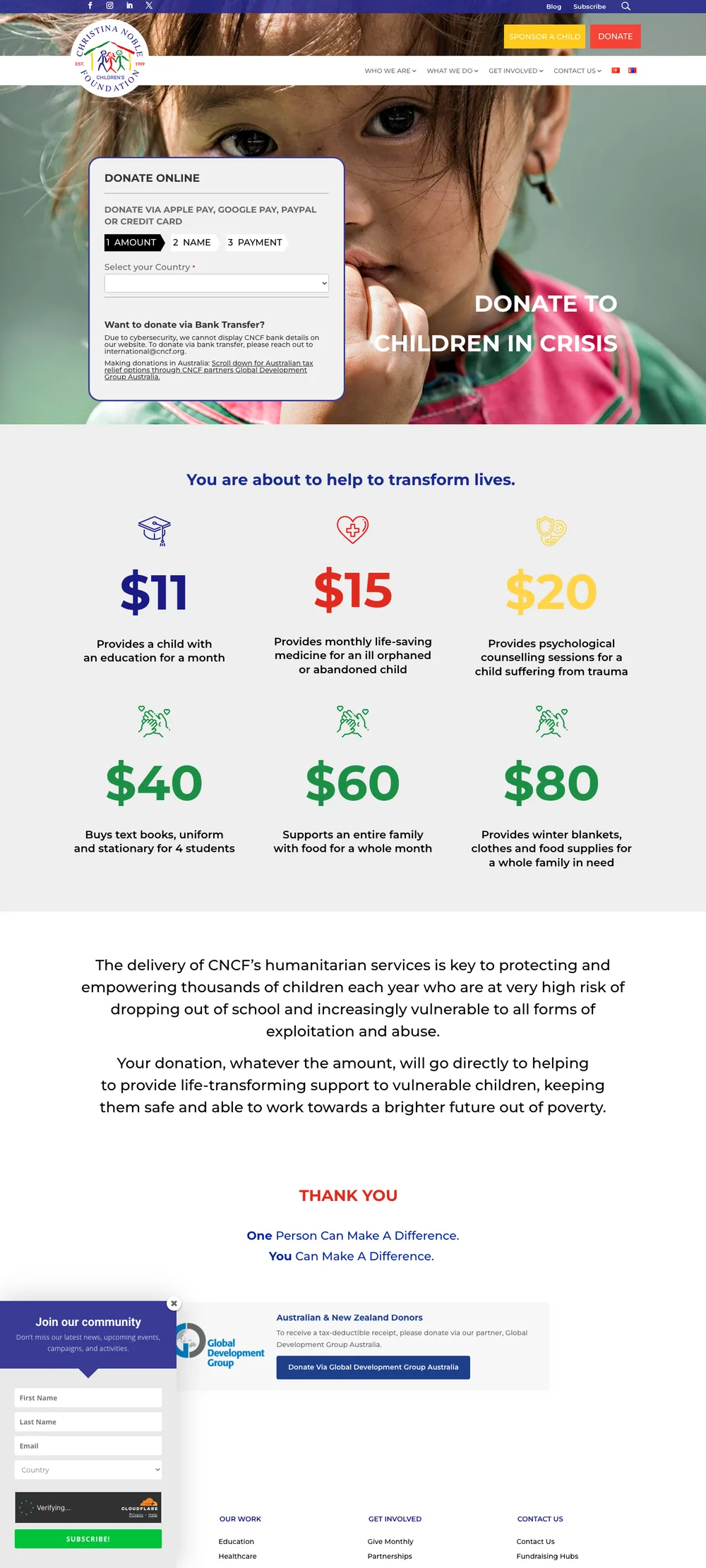
Country first, then amounts. No default frequency. Sixteen-option allocation dropdown. Ten to fourteen fields.
 Christina Noble Children's Foundation
Four working prototypes, three ideas none of the children's charities we reviewed in Vietnam or Mongolia have shipped, and a plan for a cncf.org that gives as much as the people who read it.
×
Please enter the access code from your email to open this proposal.
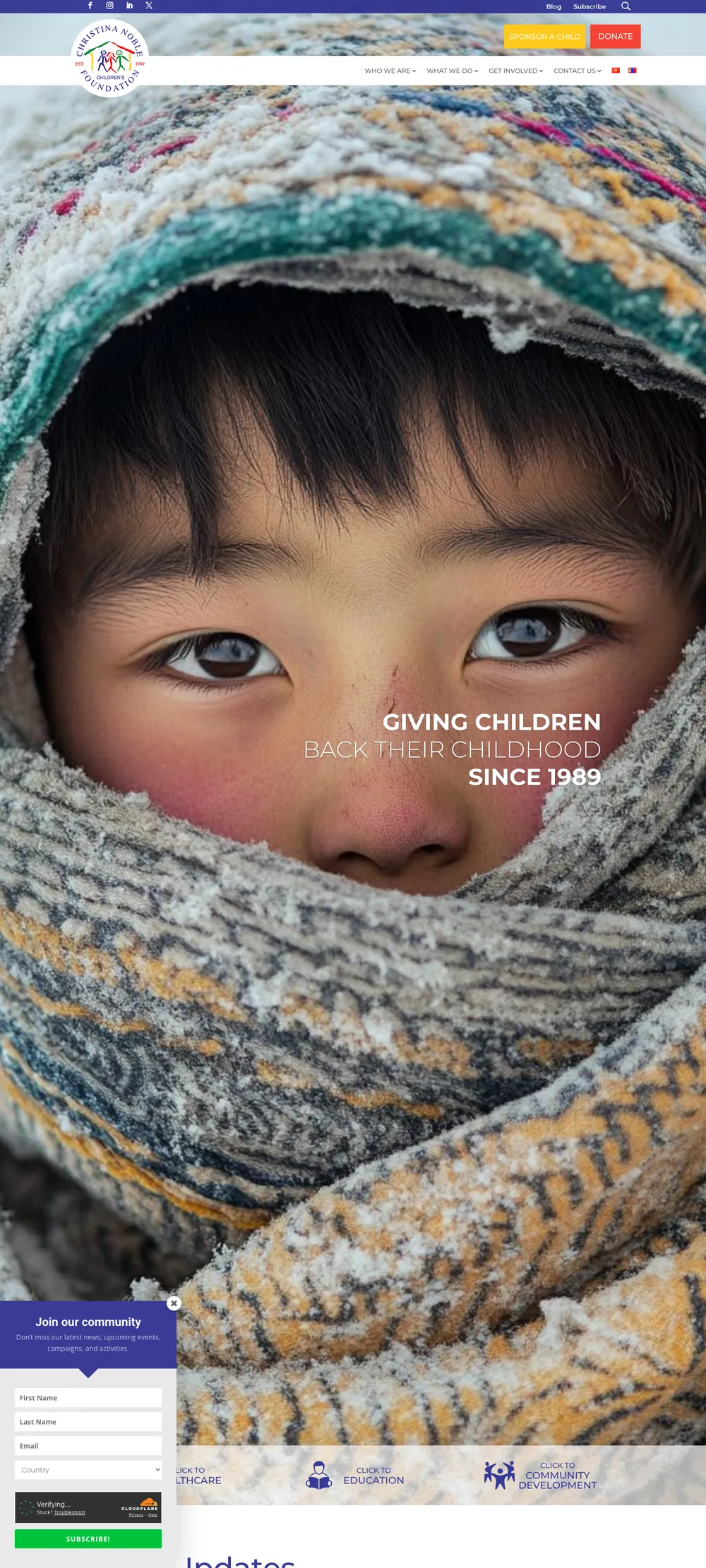
In 1989 Christina Noble arrived in Saigon with 748 dollars and a dream. In July 2026 the foundation honoured its legacy and reshaped its future. The website is still telling the 2019 story. This proposal is a new front door: a homepage that converts, a giving engine built for seven fundraising entities and nine currencies, and a story experience that makes people stay.
Your July newsletter, "Honouring Our Legacy, Shaping the Future", told supporters the truth: the Sunshine Centre now belongs to the Ministry of Health, the schools and residential homes have closed, and the work has moved to family-based care, scholarships, surgery, child protection and Mongolia.
Today the Education and Community Development pages still present the Sunshine programmes as live, and the donate form still asks people to fund "Residential Protection for Children at Risk". A supporter who reads the newsletter and then visits the site meets two different organisations. Meanwhile more than 800 children are waiting for a sponsor and the homepage does not say so once.
Your own trustees' report lists "global brand repositioning" and "Digital Empowerment" as strategic priorities. This is that project.
Headless Chrome, Lighthouse, the donation form's own source code, Google, and the AI answer engines. Everything below is measurable and we will show you the evidence. None of it is a criticism of the people who built it. The 2024 work underneath it is why the payment plumbing is solid, and the site describes the foundation as it was before the 2025 and 2026 changes.
About 120 scripts, 53 stylesheets and 27 font files. Stripe's 1 MB library loads on the homepage where no payment happens. Lighthouse performance: 51 on mobile.
Country must be chosen before any amount appears. Two mandatory dropdowns, allocation and "name on website", add nothing for the donor. Neither Single nor Monthly is pre-selected, so monthly is never the nudge.
Both buttons send people to the donate page, where the monthly intent is lost. Monthly giving is 27% of online charity revenue, and a year on 71% of monthly donors are still giving versus 24% of new one-off donors (M+R Benchmarks 2026).
US donors wanting a 501(c)(3) receipt are told to email for bank details. Australian donors are sent to a third-party site. Impact tiles promise $11, $15 and $40 gifts that do not exist as presets.
Leadership is linked twice, once to a dead page. Test pages such as home-2 and a form test page are live and in the sitemap. The finance page still opens with a 2019 COVID notice.
Your 2024 Annual Report has 7,319 children directly supported, 4,029 medical consultations, 578 graduates and 84.2% of spending on programmes. Saigon Children's Charity leads its homepage with 239 schools and 49,172 scholarships. You do not.
SOS, Children of the Mekong, Holt and Saigon Children take those results. Your robots.txt blocks GPTBot, ClaudeBot and six other AI crawlers, and Perplexity's bot is refused at the edge, so AI assistants have almost nothing of yours to cite.
13 to 20 images per page have no alt text. The donate page has six H1 headings and its hero still reads "Donate to children in crisis", an emergency frame from 2020.
Annual reports back to 2015, per-country project reports, finance and safeguarding policies, Charity Navigator four stars. Most small charities cannot say that. We will put it next to the donate button, not in the footer.
Stripe, PayPal, Apple Pay, Google Pay, MoMo, fee cover, Gift Aid, Irish CHY and French receipts, and, we understand, Salesforce behind it. We will confirm the CRM in discovery. We keep what works and rebuild the experience on top of it.
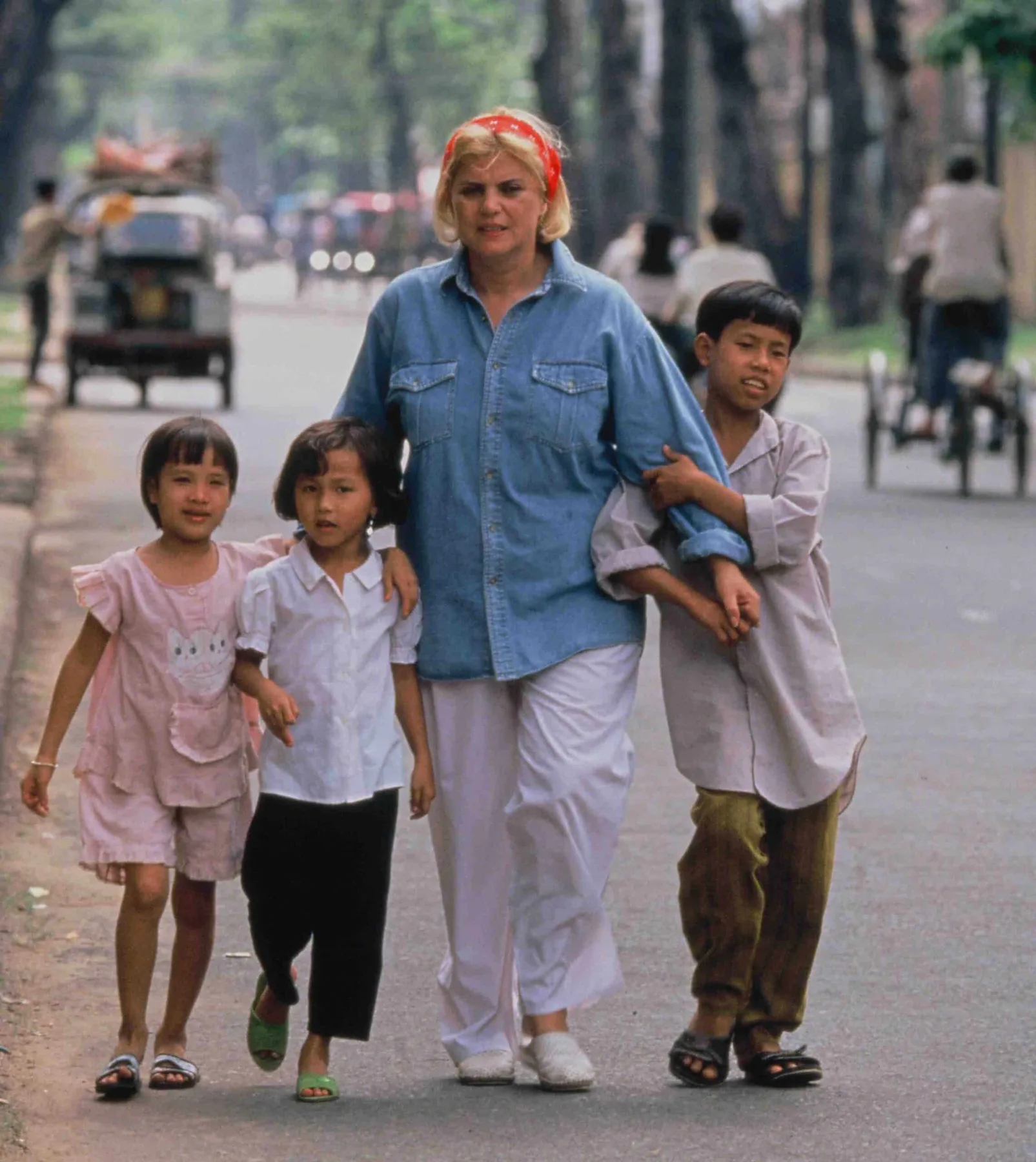
Two best-selling books, a feature film, an OBE, 700,000 children, and a founder the children call Mama Tina. The sponsor page already tells it well. The rest of the site should.
We studied charity: water, Save the Children, UNICEF UK, World Vision, Compassion, Plan, Room to Read, GiveDirectly, Mary's Meals, and your neighbours Blue Dragon and Saigon Children. The mechanics that move money are consistent, and measurable.
Defaulting the form to monthly and adding one impact line ("$38 keeps a child in school for a month") increased monthly donors by 187.7% in a controlled test (NextAfter, 99.9% confidence).
of monthly donors are still giving after twelve months. New one-off donors: 24%. By our arithmetic, every monthly convert is worth roughly three one-off donors over a year (M+R Benchmarks 2026).
of charity website traffic is mobile, and 43% of gifts. Your mobile donate page scores 50 and takes 9 seconds to paint. Wallets like Apple Pay and MoMo exist to remove exactly that friction.
on desktop and 8% on mobile for a well-built main donation page. Small organisations average 4% on mobile. The gap is design, defaults and speed, not generosity.
of all visitors to a charity website make a gift, worth $1.33 per visitor. A homepage with an inline giving card and visible impact is how the best sites get there.
children waiting for a sponsor, at $38 a month. Every extra sponsor is USD 456 a year, and the retention curve says most are still giving a year later.
Sources: M+R Benchmarks 2026 (website performance and fundraising studies), NextAfter monthly-default experiment, Fundraise Up wallet study May 2026, Fundraising Effectiveness Project Q4 2025.
Your logo is a child's drawing: a roof, three figures, four crayons. Your neighbours default to clean corporate blue and stock photography. None of them looks hand-made. We propose a site that looks the way the foundation feels: hand-made, warm, honest, and unmistakably yours.
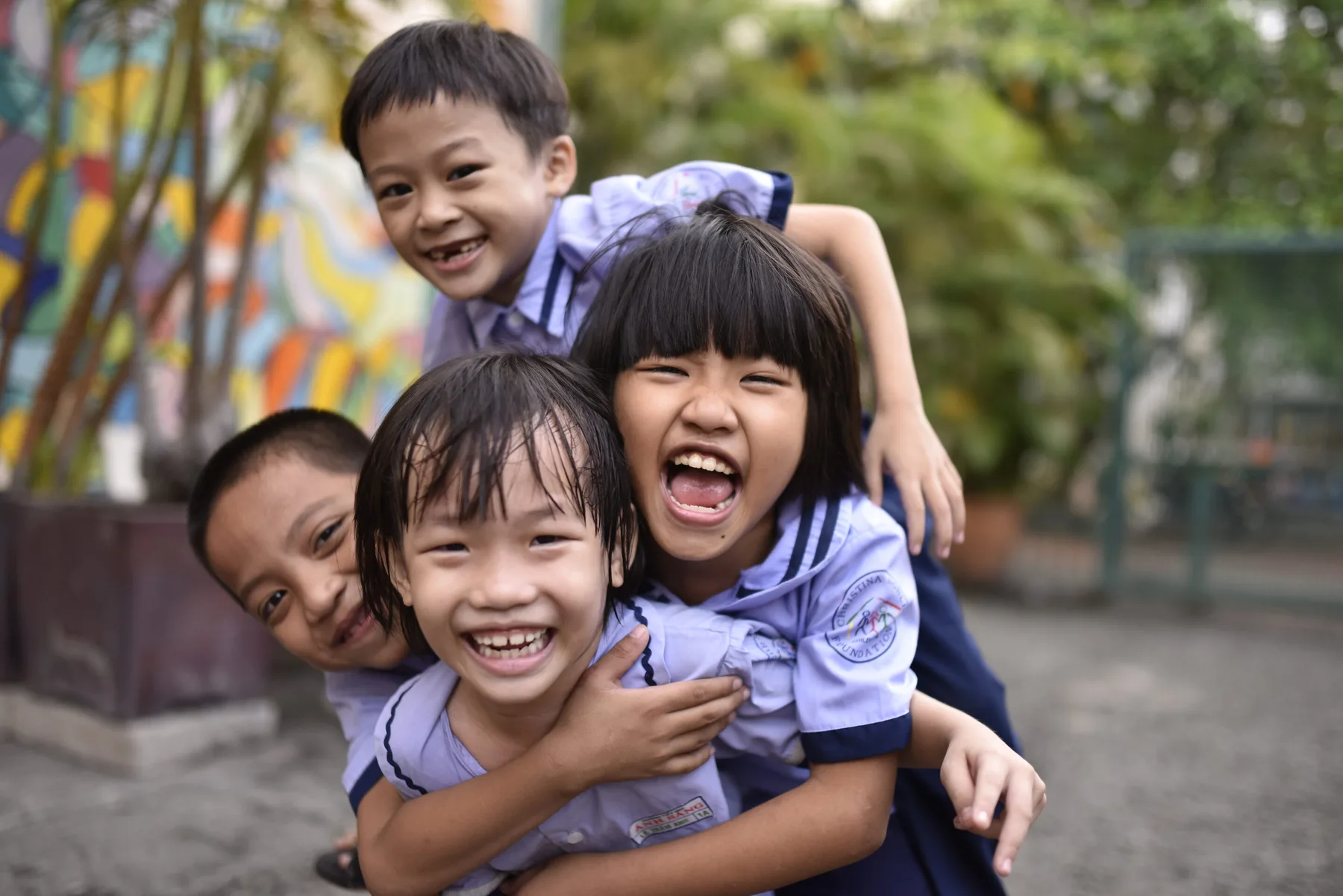
The palette is lifted straight from the logo. The typography is editorial, not charity-sector. Photography is your own: joyful where the children are joyful, honest where it needs to be, never a distressed face used as a sales tool.
Motion is quiet and purposeful: a crayon line that draws itself, a number that counts up once, a photograph that breathes. Nothing spins, nothing auto-plays, and everything respects a visitor who has asked for reduced motion.
Five rules sit under every page. They are the brief for our designers and the test for every review with your team.
Every giving moment defaults to monthly with one impact line. One-off is a tap away, never the headline.
7,319 children, 4,029 consultations, 578 graduates, 84.2% to programmes, 800 waiting. Counted up, sourced, updated by your team in the CMS.
Currency, tax wording and receipt entity follow the visitor. Vietnamese donors get VND and MoMo first. Australians stay on your site, with tax relief still routed through Global Development Group.
"One is very important. There are many ones… and they all add up." That sentence is the brand. Every page ends by inviting the reader to be one.
First names only, no locations finer than a province, consent recorded per child, every sponsor letter screened. Your existing policies become product rules.
These are real pages built with your photographs, your numbers and your programmes. They open in a new tab, work on a phone, and are marked "illustrative" wherever we had to invent a figure.
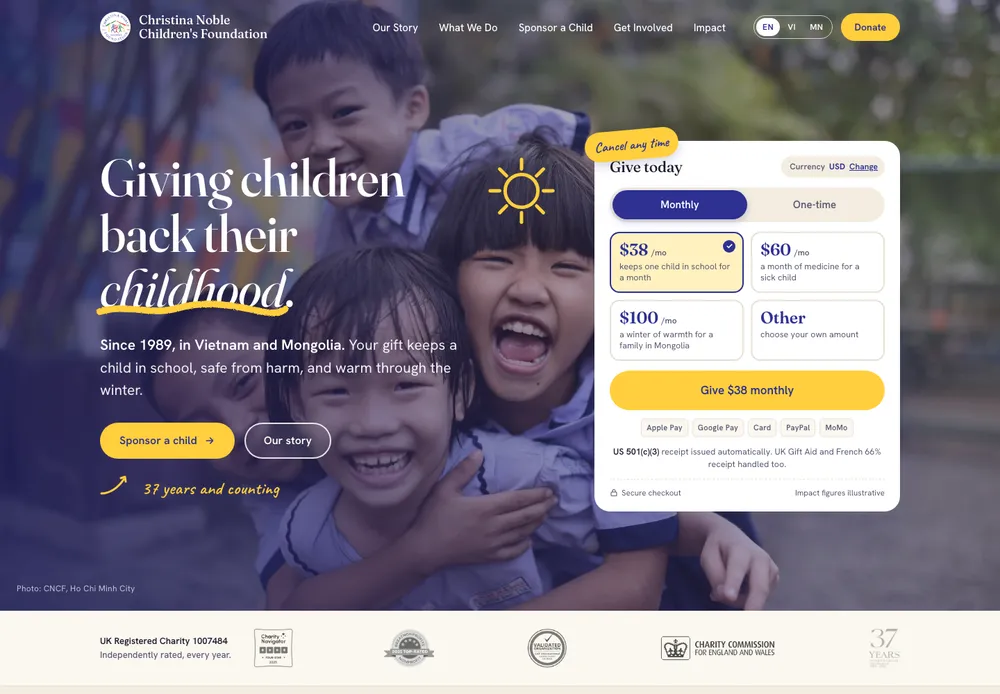
An inline giving card that defaults to monthly and detects the visitor's currency. The "800 waiting" gauge above the fold. The post-2026 programmes, honestly described. Christina's story in her own words. Trust badges beside the button, not in the footer.
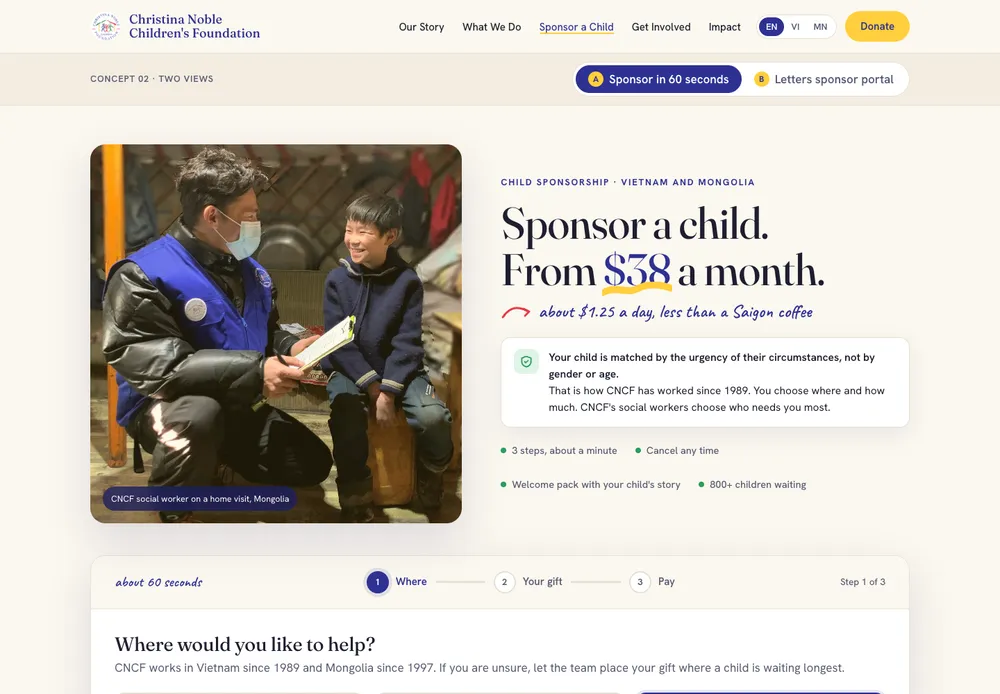
Three steps replace a 31-field form. No gender question, because you match by need. Gift Aid appears for British donors, MoMo for Vietnamese ones. Then the part none of your regional peers has: a sponsor portal with screened, translated letters, milestones and an annual photo.
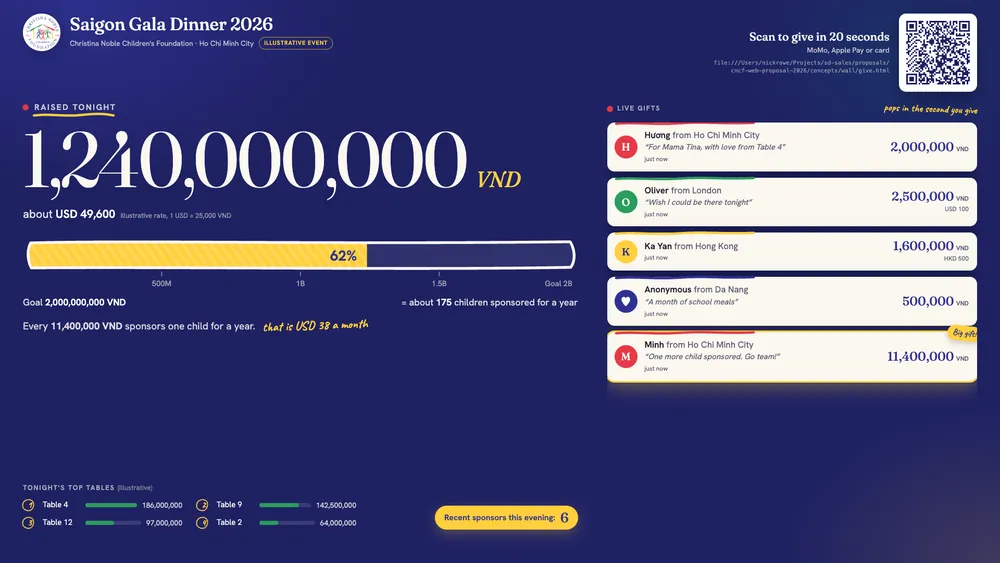
Built for the Ladies' Long Lunch, the golf days, the Cycle Challenge and every gala. A QR code on the screen, a 20-second phone gift with MoMo or Apple Pay, and the donor's name lands on the wall while the room watches. Between events the same wall becomes the Give a Ger appeal widget on the homepage.
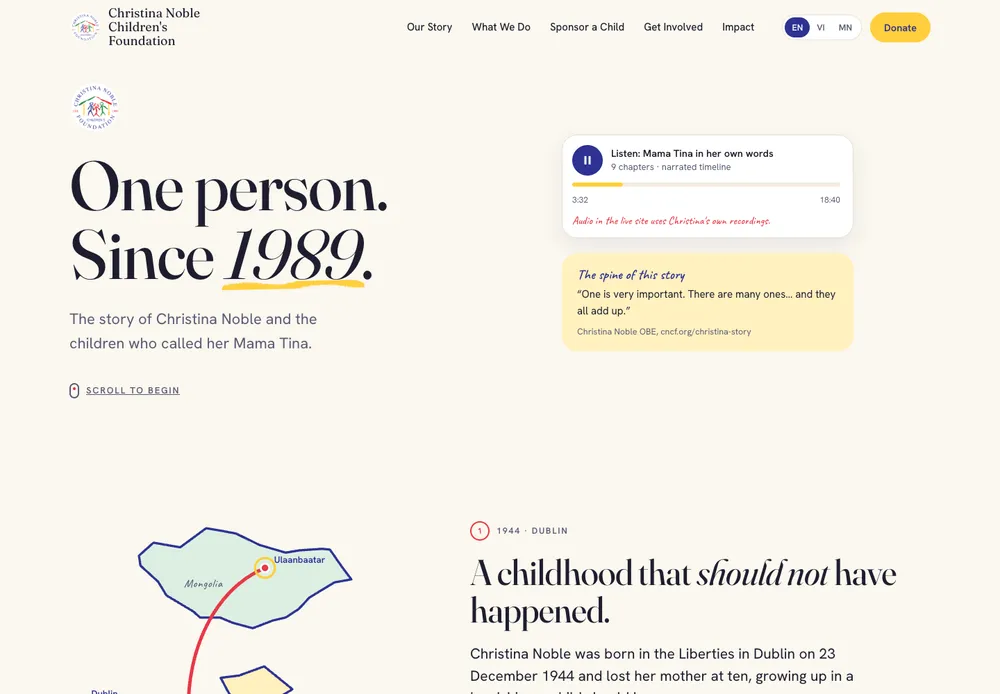
A scroll-driven journey from Dublin to Saigon to Ulaanbaatar. A crayon line draws itself across the map as the years tick from 1944 to 2026. Christina's words, your archive photographs, the 2024 numbers counting up, and the July 2026 decision told with dignity. It ends with one ask: be one.
We looked at twenty charity websites, including your closest neighbours Blue Dragon, Saigon Children's Charity and KOTO. None of the peers we reviewed do these three. Each is built into a prototype above, each has a safeguarding note, and each can ship in Phase 1 or 2.
Sponsors log in to a page for their child: screened letters both ways, drafted by translation and approved by your social workers, milestone cards, a yearly photo, a one-tap birthday gift. World Vision and Compassion do this globally with big budgets. None of the locally founded children's charities we reviewed in Vietnam or Mongolia do.
Safeguarding: every message moderated before release, first names only, no location metadata, consent per child with the right to withdraw. Built on your donor CRM data.
A QR code and a giant wall for every gala, golf day and long lunch. Gifts appear in real time with first names and messages. Tables compete. Between events the wall becomes the Give a Ger winter appeal on the homepage. It turns a room's attention into a queue of monthly donors.
Safeguarding: none for the payment flow. Donor names are opt-in, which your form already asks. Designed to work with the Stripe, MoMo and Apple Pay accounts you already have.
The scroll story becomes a nine-chapter, headphones-on experience narrated by Christina from her own recordings and her books, with the film and your short "Dandelion" embedded. It is a fundraising page and an archive project at once. Christina is 81, and her voice is the archive. Recording it belongs in this project.
Safeguarding: her story is her own. Children's voices only with consent or performed. Vietnamese and Mongolian versions voiced by people, not machines, unless the family asks otherwise.
This is the part that pays for everything else. We keep your gateways and your CRM. We change what the donor sees, in what order, and how fast.
Country first, then amounts. No default frequency. Sixteen-option allocation dropdown. Ten to fourteen fields.
Amount first, monthly pre-selected with one impact line, four presets with photos, country and currency detected and changeable in one tap. Designed for five fields on a card gift and two for Apple Pay or MoMo.
USD, GBP, EUR, HKD, AUD. No VND despite MoMo. Australians sent off-site. Americans told to email for bank details.
Adds VND, NZD, AED and MNT. VietQR and MoMo first for Vietnam with a Zalo share. Gift Aid, 501(c)(3), Irish CHY and French 66% handled inline with the right receipt entity, no email. Australian tax-deductible gifts routed through Global Development Group without leaving your site, subject to their API.
Sponsorship: 31 fields, gender question, "the team will be in touch once matched". Payment before the sponsor sees anything.
Three steps, matched by urgency, instant confirmation with a welcome-pack timeline and a portal login. Yearly option and gift cap preserved. CRM record created automatically.
Thank-you page is plain text. Success and failure pages indexed by Google. No monthly upsell.
Receipt summary, share card, "make it monthly" offer for one-off donors, and a first letter from the programme within the week. Utility pages set to noindex.
Twelve fundraising hubs, six of them dead links. Event pages 404. Events live in Instagram.
One hub per entity with its own charity number, receipt and bank details. Event pages with owned fundraiser pages for the Cycle Challenge, Property Race Day and the golf days, plus the Live Giving Wall.
Vietnamese and Mongolian pages with English headlines and footers. Flags for languages. No x-default.
Three complete languages with native review, a proper language switcher, hreflang done right, and VI and MN giving flows that use local payment habits.
5.9 MB, 323 requests, Divi and fourteen plugins. AI crawlers blocked. Yoast default schema only.
Target: under 1 MB on first load and Lighthouse 90 plus on mobile, measured at launch. NGO and DonateAction schema, FAQ schema, an llms.txt, and crawler access opened with safeguarding rules for children's imagery.
Our recommendation is a modern content platform with a fast front end, connected to the Stripe, PayPal and MoMo accounts you already have and to your donor CRM for records. Your team edits every page, number and story in a visual editor with preview. Nothing depends on a page builder or a plugin update.
We migrated Ski.com, a business that lives on organic search, onto the same stack without losing a single ranking. A charity site with 160 pages and three languages is well within that.
A custom block theme, the same giving engine, the same design. Lower cost, familiar admin, but slower, harder to keep secure, and every future feature fights the platform. We will build either. We would choose the first.
The questions a board will ask before it says yes, answered plainly.
Timing note: fourteen weeks from an early October start lands launch in mid-January, after the Give a Ger winter appeal and the December giving season. If you would rather launch the giving engine before the appeal, we can phase it first.
You see working pages from week three, not a big reveal at the end. Your communications team is in the room throughout, and the Vietnam and Mongolia teams review every translated page.
Stakeholder interviews with Tom, Helenita and the country teams. Donor interviews across the UK, Hong Kong and Vietnam. Content audit of all 160 pages against the post-2026 programme list. CRM and payment mapping. Safeguarding workshop that turns your policies into product rules.
Design system from the crayon direction, then every template: homepage, giving, sponsorship, portal, programme, story, hub, event, blog, about, reports. Photography selection with the communications team. Copy in English first, then Vietnamese and Mongolian with native reviewers.
CMS models, front end, giving engine with Stripe, PayPal, MoMo and VietQR, tax and receipt logic per entity, CRM sync, Since 1989 story, Live Giving Wall, three languages, redirects for every existing URL, schema, analytics and GA4 events for every giving step.
Content freeze, team training, launch on a quiet day, 30 days of monitoring. First conversion report at day 30: donate-page conversion, monthly share, sponsorship completions, mobile share, and the search terms you now appear for.
Saigon Digital is a Ho Chi Minh City agency. The foundation has been giving to this city since 1989, longer than most of our team has been alive. We have priced this as a charity partner, not as a corporate client. If the board needs the work in a different shape, we will reshape it.
Discovery, design system, every template, the giving engine for seven entities and nine currencies, sponsorship flow, the Since 1989 story, the Live Giving Wall, three languages, full migration, launch and 30 days of care.
Audio recording sessions with Christina, professional photography, paid media, and the Letters portal, which is priced below as Phase 5.
Sponsor login, child page, screened two-way letters with translation queue, milestones, birthday gifts, staff moderation console, CRM integration. Eight weeks after launch.
Updates, security, backups, uptime monitoring, monthly conversion report and direct support. Rolling monthly, 30 days' notice, no lock-in.
SEO foundation so "sponsor a child Vietnam" finds you: keyword plan, technical foundation, schema, first twenty stories, and AI-crawler access done safely.
"Saigon Digital transformed how Ski.com shows up online. Beyond rebuilding our platform, they helped us rethink our entire search and AI visibility strategy. We saw a significant uplift in organic traffic, our content started appearing in AI-generated travel recommendations, and the quality of inbound leads improved dramatically."Harry Peisach · CEO, Ski.com · Verified client





Saigon Digital has built from Ho Chi Minh City since 2016. A team of designers, developers and SEO specialists in the same city as your Vietnam office means workshops in person, reviews in your timezone, and people who already understand MoMo, Zalo and a Vietnamese audience.
Share this link with the board and the communications team. When you have had a look, we will walk through it together, take the feedback, and agree a start date. Discovery can typically begin within two weeks of a yes.
Nick Rowe · CEO and Co-Founder, Saigon Digital · nick@saigon.digital